

SEO for Builders: The Project Searches That Win Contracts
Builders cannot win the head terms and do not need to. The project searches that convert, the pages that earn
Read More about SEO for Builders: The Project Searches That Win ContractsIn 13 years of consulting, the most common question I get from business owners is not "what should we do". It is "is any of it working". And the honest answer, more often than not, is that nobody knows, because the measurement was never set up before the money was spent. Marketing ROI does not have to be mysterious. It comes down to a plain English method: define the value of a lead, set up tracking before you spend, choose an attribution model you can actually run, and read the numbers like a consultant would. This post walks through that method, and it is honest about why measurement is hard, because pretending otherwise is how owners keep guessing. ROI stands for return on investment, and the concept is simple: what you got back compared to what you put in. The jargon around marketing measurement exists to obscure that simple idea, so start by stripping it away. The basic formula is (return minus cost) divided by cost, shown as a percentage. If you spend $10,000 and the marketing produces $30,000 in revenue you can trace to it, the return is $20,000 on a $10,000 investment, which is 200% ROI. Every dashboard, attribution model and fancy report is ultimately trying to answer that one question: what did we get back for what we put in. Activity is what marketers do: ads run, posts published, emails sent, clicks counted. Revenue is what those activities produce. A campaign can look busy and still lose money, and a quiet campaign can quietly print enquiries. Measure the business outcome, not the activity. If the report you receive each month is full of activity and empty of revenue, you are not reading an ROI report, you are reading a progress update for work that may not be working. If measuring ROI is this simple in theory, why do so few businesses actually do it? The data says the problem is widespread, and it is not a maths problem. Ask marketers what holds them back and measurement tops the list. According to HubSpot's 2026 State of Marketing survey, "The top challenges marketers cited in the 2026 State of Marketing survey are measuring the ROI of marketing activities (33%), keeping up with the latest trends and new platforms/features (29.8%), generating leads (29.6%), and sales-marketing alignment (27.6%)." Measuring ROI is the single most cited challenge in marketing, which means if you find it hard, you are not alone and you are not slow. You are missing a system, not intelligence. The strange part is that most businesses already sit on the data they need. HubSpot's research on content scoring found that "87% of marketers reported that data was their company's most underutilized asset". The analytics are installed, the CRM has records, the calls are logged, and none of it is connected. Marketing ROI fails in most Australian businesses not because the numbers do not exist, but because nobody has done the unglamorous work of joining them up. You cannot measure return until you have defined what a return is worth to you. This step sounds obvious and is skipped more than any other, because it forces you to look at your own numbers honestly. Start with what a customer is worth. Take your average sale value, multiply by how many times a customer buys from you, and subtract what it costs you to deliver. That gives you the lifetime value a new customer brings. Then work backwards: if one in ten enquiries becomes a customer, each enquiry is worth roughly one tenth of that customer value. Now you know what a lead is worth to you, and you can judge whether the marketing that produces leads is cheap or expensive. Not all leads are equal. A lead from a referral who already trusts you is worth more than a cold lead from a banner ad, because it converts at a different rate. Value leads by channel and source where you can: which enquiries came from search, which from referrals, which from ads, and what each type actually produced. This is the foundation of every useful ROI conversation, because it stops you treating a $50 lead and a $500 lead as the same thing. The most expensive mistake in marketing measurement is deciding you want it after the campaign has run. Tracking has to be in place before the spend, or the data simply does not exist. If you need help getting the plumbing right, Google Analytics consulting services for tracking setup are built for exactly this stage. Three pieces of tracking matter for most businesses. Analytics tells you what happened on the website: where visitors came from and what they did. Conversion tracking tells you which of those visitors took the action you care about: a form, a booking, a purchase. Call tracking tells you which marketing produced the phone calls, which for most Australian service businesses are where the real enquiries happen. Miss any of the three and you are measuring part of the picture and calling it the whole. Before you rely on any number, sanity check it. Is the analytics code on every page? Are conversions tracking the right action, not just any click? Are phone calls being recorded as conversions or vanishing into thin air? Is the data consistent with what your sales team actually reports? Bad tracking produces confident wrong answers, which are worse than no answers, because they justify bad decisions. Spend the first week verifying the data, not analysing it. Attribution is the answer to a fair question: when a customer buys after seeing your ad, reading your blog and calling from a Google search, which channel gets the credit? How you answer changes which channels you fund. Last click gives all the credit to the final touch before the sale. First click gives it all to the first touch. Neither tells the truth for most buyers, because most buyers touch several channels over weeks before they commit. The Content Marketing Institute's B2B research shows how hard this gets: "We asked B2B marketers what challenges their team faces while measuring content performance. Fifty-six percent say difficulty attributing ROI to content efforts. The same number cite difficulty tracking customer journeys." If attribution feels impossible, that is because it genuinely is hard, which is exactly why you need a model you can defend rather than a perfect one. You do not need perfect attribution. You need a consistent model you can explain and defend. Many small businesses do well with a simple rule: credit the first meaningful touch for creating the lead and the last touch for converting it, or use a position based model that splits credit across the journey. The model matters less than the consistency. Change the model every month and you will never know what actually works. Let me show you the formulas in plain numbers, because ROI is easier to understand when you can see it worked. At campaign level, take the revenue the campaign produced, subtract the total cost of the campaign, divide by the cost, and multiply by 100. At channel level, do the same for each channel: SEO, ads, email, referrals. The channel level view is the one that tells you where to put next month's budget, because it shows which channels return more than they cost. If you are planning spend you want to measure later, run the numbers first with a marketing budget calculator to plan spend you can measure. Example one: you spend $5,000 on a campaign and trace $20,000 of revenue to it. Return minus cost is $15,000. Divided by $5,000 is 3. Times 100 is 300% ROI. Example two: you spend $2,000 a month on a channel that produces enquiries worth $1,500 a month in expected value. Return minus cost is negative $500. Divided by $2,000 is negative 25%. One channel is printing money and the other is burning it, and the formula showed you which is which in two minutes. The hard work is not the maths. It is trusting the tracking enough to believe the inputs. Are you doing SEO or Ads? Stop wasting money on ads that are not working. Once the numbers are flowing, the skill is reading them without fooling yourself. The same data can support opposite conclusions depending on how you look at it, so look at it the way a consultant would. One week of bad numbers is noise. One month is a signal. Three months is a trend. Owners panic over a quiet week and celebrate a lucky one, and both reactions are wrong. Watch the direction over at least one full sales cycle before you change anything. If your sales cycle is six weeks, a two week judgement on a campaign is meaningless, no matter how the dashboard looks today. Compare this month against the same period last year, or against the previous month under the same conditions, not against a number from a different season, a different offer or a different market. If you changed the offer, the price or the market at the same time as the marketing, you cannot cleanly credit the marketing for what followed. Consultants compare like for like precisely because clean comparisons are the only ones that support clean decisions. Everyone wants a benchmark: what ROI should marketing produce? The internet is full of averages, and almost all of them will mislead you if you take them at face value. Published averages blend every industry, every business size, every country and every definition of cost and return. A plumbing business measuring enquiries and a software company measuring subscription revenue are not measuring the same thing, yet both feed the same averages. A benchmark that says marketing should return five times spend tells you nothing about whether your local service business is doing well, because the inputs behind that average do not look like yours. The most honest benchmark you have is your own history: this quarter against last quarter, this channel against that channel, this year against last year, all measured the same way. If cost per enquiry is falling and enquiry value is holding, marketing is improving regardless of what any industry average says. Build your own trend line, measure it consistently, and let the public averages inform your expectations rather than set them. There comes a point where the measurement problem is not a spreadsheet problem but an expertise problem. Recognising that point saves months of spinning in place. You need help when you cannot connect your marketing spend to any business number, when your channels have multiplied beyond what a simple model can handle, when your sales cycle is long and multi touch and you have no idea which marketing is working, or when you are making budget decisions on gut feel because the data does not answer the question. Those are not laziness problems. They are system problems, and systems are what a specialist builds. A proper ROI analysis service starts by mapping what you can and cannot measure today, fixes the tracking gaps, defines the value of your leads and customers from your own numbers, applies a consistent attribution model, and produces a channel by channel view of what is returning and what is burning. The output is not a dashboard. It is a decision: where the next dollar should go, based on evidence rather than hope. If your next marketing budget is being set on hope, that is the conversation worth having. The basic formula is (return minus cost) divided by cost, shown as a percentage. The hard part is not the maths, it is deciding which revenue and which costs belong to the campaign. Analytics shows behaviour well, but revenue usually happens in your CRM, phone calls or shop. You need to connect those sources to see real return. Crediting the last click with all the revenue. Most buyers touch several channels, so a last click view understates the channels that started the journey. At least one full sales cycle, and ideally 90 days, because leads generated early often convert later. Judging a campaign after two weeks tells you nothing. No. A spreadsheet plus analytics plus a way to track enquiries can get most small businesses 80% of the way. Software helps when you have many channels and a longer sales cycle. Stop spending on channels you cannot measure, fix the tracking gaps first, then scale what you can prove. Guessing at budget allocation is how marketing budgets get cut.
What Marketing ROI Actually Means
The simple formula under all the jargon
Why revenue matters more than activity
Why Most Businesses Can't Measure ROI
The challenge marketers name most often
Data exists but nobody uses it
Decide What a Lead or Sale Is Worth
Work backwards from your numbers
Value by channel and by source
Set Up Tracking Before You Spend
Analytics, conversions and call tracking
What to check before you trust the data
Attribution: Which Channels Deserve Credit
First click, last click and everything between
Pick a model you can defend
Simple Marketing ROI Formulas That Work
Campaign level and channel level
Worked examples in plain numbers
Get a free consultation with us
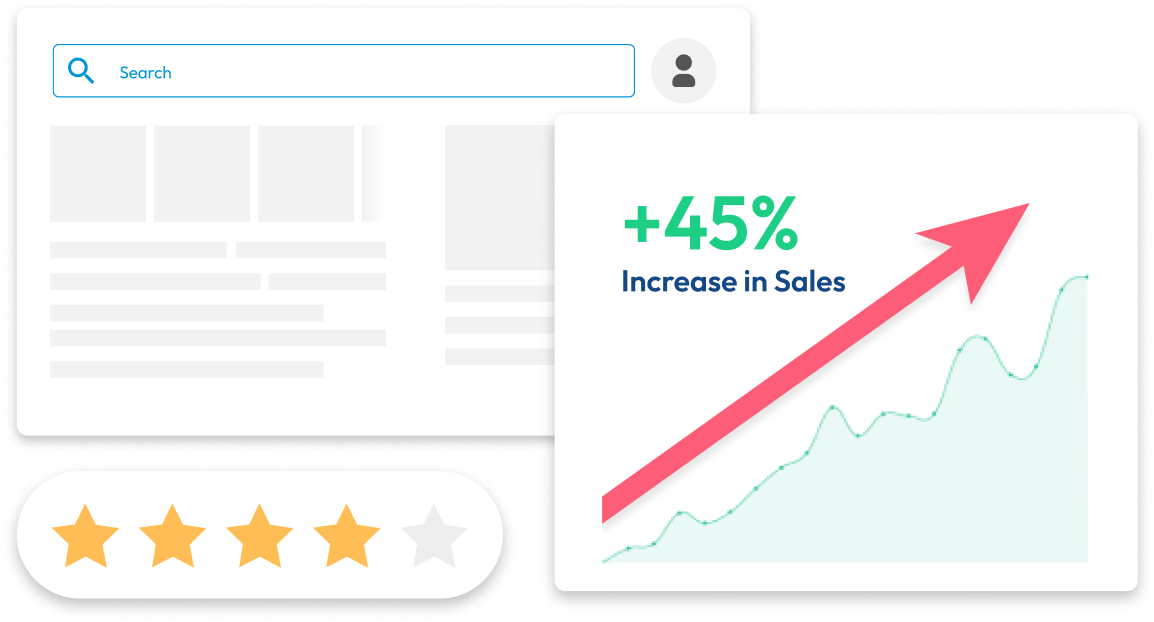
Read Your Numbers Like a Consultant
Trends over single weeks
Compare like for like
Marketing ROI Benchmarks to Treat With Care
Why public averages can mislead you
Your own trend is the benchmark that matters
When to Get Help With ROI Analysis
Signs your measurement needs an expert
What a proper ROI analysis includes
Frequently Asked Questions
What is the formula for marketing ROI?
Why can't I measure marketing ROI with just Google Analytics?
What is the most common ROI measurement mistake?
How long should I measure a marketing campaign before judging it?
Do I need expensive software to measure ROI?
What should I do if I cannot prove marketing ROI?


Latest Blog



WINNER
FINALIST
FINALIST
WINNER
WINNER
FINALIST
FINALIST
WINNER

Xugar Holiday Offer