

SaaS Marketing for Australian Software Companies
SaaS marketing in Australia: how software businesses get found by buyers, earn trust before the trial, and convert signups into
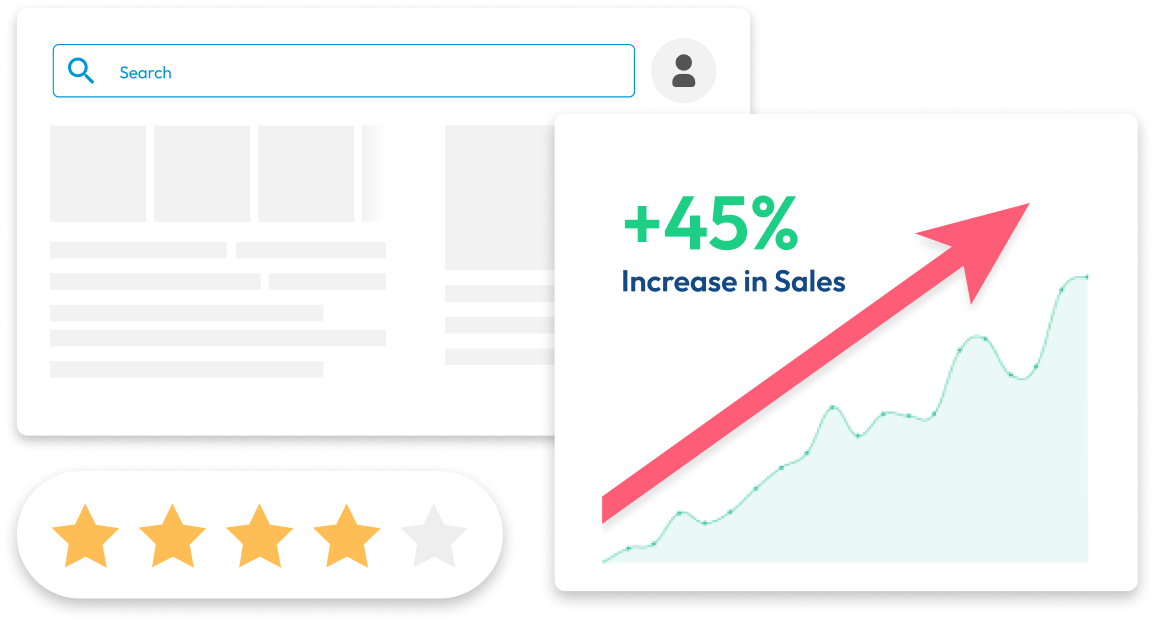
Read More about SaaS Marketing for Australian Software CompaniesAfter years of audits, I keep seeing the same pattern. A business pays for traffic, sends it to an average website, and then watches most of it leak out without ever becoming an enquiry. The fix is not more traffic. It is conversion rate optimisation, which is a fancy way of saying: make the traffic you already have actually convert. This post is the plain English version of what I tell clients about CRO. It covers what conversion rate optimisation actually is, why your traffic is not converting, what a good conversion rate looks like, how to measure your own, and the fixes that produce the biggest lift. If you are spending money on ads or SEO and wondering why the enquiries do not match the visits, read this first. Before you can improve anything, you need a definition that helps rather than one that sounds clever in a meeting. Conversion rate optimisation is the process of improving the percentage of website visitors who complete a desired action, such as submitting an enquiry form, calling your business or making a purchase. It is expressed as a simple equation: divide the number of conversions by the number of visitors, then multiply by one hundred. If 100 people visit your page and 3 of them enquire, your conversion rate is 3%. CRO is not a popup tool, a plugin or a one-off redesign. It is a process: measure your current rate, find where visitors drop off, form a hypothesis about why, test a fix, and measure again. It is the same discipline whether you run a Melbourne service business or a national ecommerce store. The tools change, the process does not. Most business owners assume low conversion means their website looks dated. Usually the problem is more specific, and more fixable. Visitors leak at every step of the journey. They click your ad and land on a page that does not match the promise. They read the headline and cannot work out what you do. They look for proof and find none. They find the contact form and decide it asks too much. They try to call on their phone and the number is not clickable. Each leak is small, but together they turn a healthy flow of traffic into a trickle of enquiries. In my audits the same mistakes show up again and again: value propositions written for the industry rather than the customer, no mention of suburbs or service areas, enquiry forms that ask for too much too early, slow mobile pages, and no visible proof such as reviews or case studies. None of these require a new website to fix, and all of them directly cost enquiries. Every client asks this, and the honest answer is more useful than the simple one. Published benchmarks give you a starting reference. According to the WordStream guide on conversion rates, "Across industries, the average landing page conversion rate was 2.35%, yet the top 25% are converting at 5.31% or higher." More recent data from Unbounce's conversion benchmark report puts the figure higher: "The average conversion rate for a landing page is around 6.6% across all industries as of Q4 2024." Different datasets, different measurement periods, same lesson: most pages convert in the low single digits, and the best pages convert at multiples of the average. Averages hide your real situation. A landing page fed by a tight Google Ads campaign should convert higher than a blog page fed by broad organic traffic, because the searcher's intent is stronger. A tradie page asking for a job enquiry converts differently from an ecommerce product page. Judge your rate against your own past performance and against pages doing the same job, not against one universal number pulled from the internet. You cannot improve what you are not measuring, and most businesses are measuring the wrong things or nothing at all. Your analytics needs to know what a conversion is before it can count one. In Google Analytics 4 you mark the events that matter as key events: form submissions, phone call clicks, bookings, purchases. If you have not done this properly, your conversion rate is a guess. Proper conversion measurement setup is exactly what Google Analytics consulting covers, and it is the foundation everything else below sits on. Do not measure every page. Start with the pages that matter commercially: your homepage, your main service pages and any landing pages fed by ads. Those are the pages where a conversion improvement produces revenue. Give each one its own conversion rate rather than blending the whole site into one number, because the fixes will differ by page. If you only have time for a handful of fixes, these are the ones that move enquiries. CRO is popular for a reason: according to the HubSpot marketing statistics page, "Conversion Rate Optimisation is the second-most-used optimisation technique among marketers (50%)." Within seconds a visitor should know what you do, who you do it for and why you are better than the alternatives. Write it for the customer, not for your industry. A plumber who says "fast response, fixed pricing, and we service the eastern suburbs" tells a homeowner more in one line than a paragraph about being an established award-winning provider. People buy from businesses they trust, and they build trust from evidence. Reviews, case studies, real photos of your work, years in business, accreditations: put them where the visitor is deciding, which is usually near the call to action. If your only proof is a claim about being the best, visitors will check your reviews instead, and you want those reviews to be findable from your page. The enquiry form is where many conversions die. Long forms with ten fields, no clear statement of what happens next, no phone number alternative, forms that do not work on mobile. Ask for what you actually need to qualify the lead and no more. If the first call can fill in the gaps, your form should only ask for the essentials. A slow page kills conversions silently. Most of your local traffic is on a phone, and a page that takes five seconds to load on mobile is losing visitors before they see your offer. Test your pages on a phone, not just a desktop, and treat speed as part of conversion, not a technical side issue. Are you doing SEO or Ads? Stop wasting money on ads that are not working. Testing is where most DIY CRO goes wrong. People change five things at once, see a good week, and credit the wrong change. Change one variable per test: the headline, the form, the placement of proof, the call to action. If you change several things together, you will not know which one moved the result, and you cannot repeat the win. Keep a simple record of what you changed, when, and what happened. Small samples produce noise, not answers. A test run for three days on a low traffic page tells you nothing reliable, because one busy day can skew everything. Run tests long enough to collect a meaningful sample across a full business cycle, often two to four weeks or more, and be honest about whether your traffic can support a reliable test at all. Most of the published CRO advice comes from the United States and assumes scale that small Australian businesses do not have. The version that works here is simpler. Australian customers look for different signals than US audiences. They want to know you are local, that you understand their area, and that other local customers have had a good experience. Service businesses in particular convert better when the page speaks to their actual suburbs and their actual jobs. If you want to see how this plays out for service businesses, the professional services case studies show how enquiry flow improves when conversion basics are fixed properly. You can do the basics yourself, and plenty of businesses should. Help makes sense when the leaks are not obvious, when you have changed things without improvement, or when the cost of guessing is high because you are spending serious money on traffic. A consultant brings an outside read on pages you are too close to see clearly, plus the measurement discipline to test properly. The starting point is usually a marketing audit that maps where traffic is leaking across your site, because that tells you which pages deserve the effort. Once the leaks are found, the same work ties back to what marketing is actually producing: measuring marketing ROI properly shows whether the enquiries you capture are worth what you paid for them. Conversion rate optimisation is not a mystery and it is not a quick win product. It is a repeatable process of finding leaks and fixing them, and it compounds: every improvement makes your ads, your SEO and your content worth more. The research backs this up. The HubSpot marketing statistics page notes that "Nearly 56% of marketers say it's much easier to improve conversion rates now than it was ten years ago (HubSpot State of Marketing Report, 2026)." The tools are better than they have ever been. The question is if you are using them. It depends on traffic source, industry and page type. WordStream data puts the average landing page rate near 2.35% with top performers above 5.31%, while Unbounce reports a median around 6.6% across its dataset. Compare against your own past performance rather than chasing one universal number. Yes. CRO makes the traffic you already pay for work harder, which lowers the cost of every lead. With a small sample, focus on obvious fixes first and give tests enough time to produce reliable data. Long enough to collect a meaningful sample across a full business cycle, often two to four weeks or more. Testing for a few days or with tiny traffic leads to decisions based on noise. Usually not. Most conversion problems are messaging, trust, form design and page structure, all fixable on the current site. A rebuild is only justified when the site cannot support the changes. Google Ads buys traffic; CRO improves what happens after that traffic arrives. They work together, but fixing conversion leaks first makes every ad dollar more productive.
What Is Conversion Rate Optimisation
A definition that actually helps
CRO is a process, not a tool
Why Your Traffic Is Not Converting
The leaks between click and enquiry
Common Australian website mistakes
What Is a Good Conversion Rate
Landing page benchmarks
Why context matters more than averages
How to Measure Your Current Conversion Rate
Setting up goals in analytics
Which pages to measure first
The Highest Impact CRO Fixes
Clear value proposition
Trust signals and proof
Forms that do not kill leads
Speed and mobile experience
Get a free consultation with us
How to Run a CRO Test Properly
One change at a time
Sample size and timeframes
CRO for Australian Small Business
Local proof and Australian context
When to Get Help With Conversion Rate
What a consultant can add
Frequently Asked Questions
What is a good conversion rate for my website?
Is conversion rate optimisation worth it if I only get a small amount of traffic?
How long does a conversion rate test need to run?
Do I need a new website to improve conversion rate?
What is the difference between conversion rate optimisation and Google Ads?


Latest Blog



WINNER
FINALIST
FINALIST
WINNER
WINNER
FINALIST
FINALIST
WINNER

Xugar Holiday Offer